
Security deposits protect landlords from tenant damage and unpaid rent, but they come with strict legal obligations that vary by state and locality. In Louisiana, security deposit rules are straightforward on the surface yet easy to mishandle in practice. Mistakes can cost you in disputes or create serious legal liability. Understanding how to collect, hold, and return deposits properly is essential for any property owner using professional property management services or managing rentals independently.
Louisiana’s Security Deposit Requirements
Louisiana law does not set a cap on the amount landlords can charge as a security deposit. Property owners have flexibility here, but you should charge enough to cover potential damages or unpaid rent without being excessive. Most landlords in the greater New Orleans area charge between one and two months’ rent.
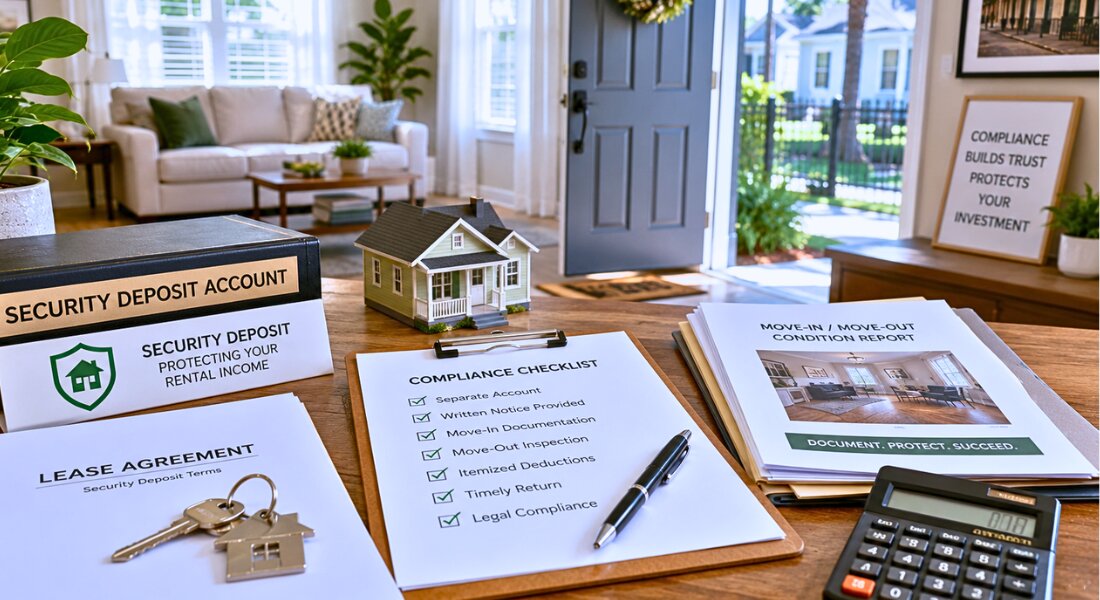
The state requires that security deposits be held in a separate account and not commingled with operating funds. Compliance with this rule is the single most important step you can take. Your bank account must clearly show that the money belongs to tenants, not to you. Many landlords maintain a dedicated security deposit account at a local bank to keep this separation clear and auditable.
Louisiana also requires landlords to provide written notice of the account’s location and type within one month of receiving the deposit. This documentation protects both you and the tenant by establishing proof of where the money is held.
About the Author: Billy Borrouso is a licensed real estate broker, Certified Residential Specialist (CRS), and licensed contractor with over 20 years of experience in the Greater New Orleans area. As the founder of Redfish Property Management, Billy brings a rare combination of real estate expertise and construction knowledge to landlords and tenants across Metairie, New Orleans, and the Northshore. He is a NOMAR Gold Award recipient and is committed to making property ownership stress-free for landlords while maintaining quality homes for tenants.
Deductions and Return Timelines
You can deduct from a security deposit only for legitimate reasons: unpaid rent, damage beyond normal wear and tear, or cleaning costs if the unit is left in unsanitary condition. You cannot deduct for routine maintenance or repairs that would occur regardless of tenant behavior.
Louisiana requires landlords to return deposits within one month after lease termination. If you plan to make deductions, you must provide an itemized statement showing each deduction, the reason, and the cost. Keeping the money without explanation opens you to small claims court action.
Document everything with photographs and written notes at move-in and move-out. If repairs are needed, get written quotes or invoices from contractors. A thorough paper trail protects you if a tenant disputes your deductions and takes legal action during the leasing process.
Common Mistakes to Avoid
Many landlords fail to return deposits on time or provide inadequate documentation of deductions. Both mistakes invite legal trouble. Some landlords charge non-refundable fees under the guise of a security deposit, which violates Louisiana law. A security deposit must be refundable. Any non-refundable charge must be called a fee and disclosed separately on the lease.
Another frequent error is storing deposits in a personal account rather than a designated account. Commingling funds this way can result in liability claims and makes it harder to prove the money was held in trust.
For detailed guidance on security deposit handling and other landlord compliance issues, consult the Louisiana State Bar Association or speak with a local attorney familiar with residential tenancy law.
Have questions about property management services across greater New Orleans, Louisiana? Reach out to us today and we’ll be happy to help you every step of the way.