
Most property owners know they should keep records. Few know what records actually matter, where to store them, or how detailed they need to be. The gap between “I have some files” and “I have proper documentation” can cost you thousands when a tenant dispute arises, a tax audit happens, or you need to sell. Smart property management starts with a recordkeeping system that protects you legally and financially.
Financial Records: The Foundation of Tax Compliance
The IRS expects landlords to track income and expenses with precision. This means every rent payment, every repair receipt, and every utility bill tied to the property needs to be documented and organized by category. Rental income records should include the tenant’s name, lease start and end dates, and monthly rent amounts. Keep bank statements and deposit records that show when rent was received.
Expense records are equally critical. Maintenance, repairs, property taxes, insurance premiums, advertising costs for finding tenants, and management fees all reduce your taxable income, but only if you can prove them. Save receipts, invoices, and payment confirmations. Many property owners miss deductions simply because they didn’t keep the paperwork. According to the IRS Publication 527 on Residential Rental Property, you’ll need to substantiate every claimed expense.
About the Author: Billy Borrouso is a licensed real estate broker, Certified Residential Specialist (CRS), and licensed contractor with over 20 years of experience in the Greater New Orleans area. As the founder of Redfish Property Management, Billy brings a rare combination of real estate expertise and construction knowledge to landlords and tenants across Metairie, New Orleans, and the Northshore. He is a NOMAR Gold Award recipient and is committed to making property ownership stress-free for landlords while maintaining quality homes for tenants.
Tenant Documentation: Protection When You Need It
Tenant files should be comprehensive and organized. Start with the completed rental application, credit report, background check results, and employment verification. These screening documents prove you used a fair, consistent process when selecting tenants. Save the signed lease agreement, any lease amendments, and move-in inspection photos or video.
During the tenancy, document everything in writing. If a tenant reports a maintenance issue, keep the communication (email, text, or maintenance request form) along with photos of the problem and receipts from the contractor who fixed it. If you have to address a lease violation, send written notice and keep a copy in the file. When a tenant moves out, photograph the property condition, document any security deposit deductions with itemized lists and photos, and file the move-out inspection report. These records become invaluable if a tenant sues over security deposit withholding or disputes damage claims.
Storage Systems That Actually Work
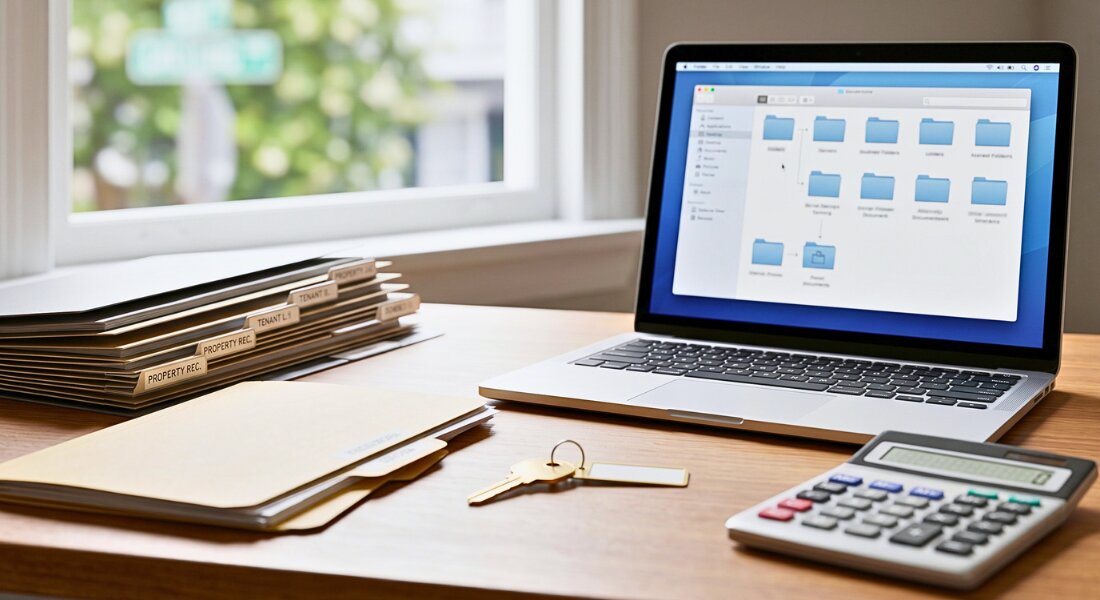
Paper files alone create risk. Documents get lost, water-damaged, or accidentally thrown away. A hybrid approach works best: scan important documents and store them in a cloud-based system with backup copies. Use a consistent folder structure organized by property address and year. Label files clearly so you can locate them within seconds during an emergency or audit.
Digital storage also allows you to share documentation securely with leasing agents, contractors, or accountants without mailing originals. Keep original signed documents in a fireproof safe at your home or office. Set a reminder to review and update your system annually so nothing gets overlooked as years pass.
Have questions about property management services across greater New Orleans, Louisiana? Reach out to us today and we’ll be happy to help you every step of the way.