

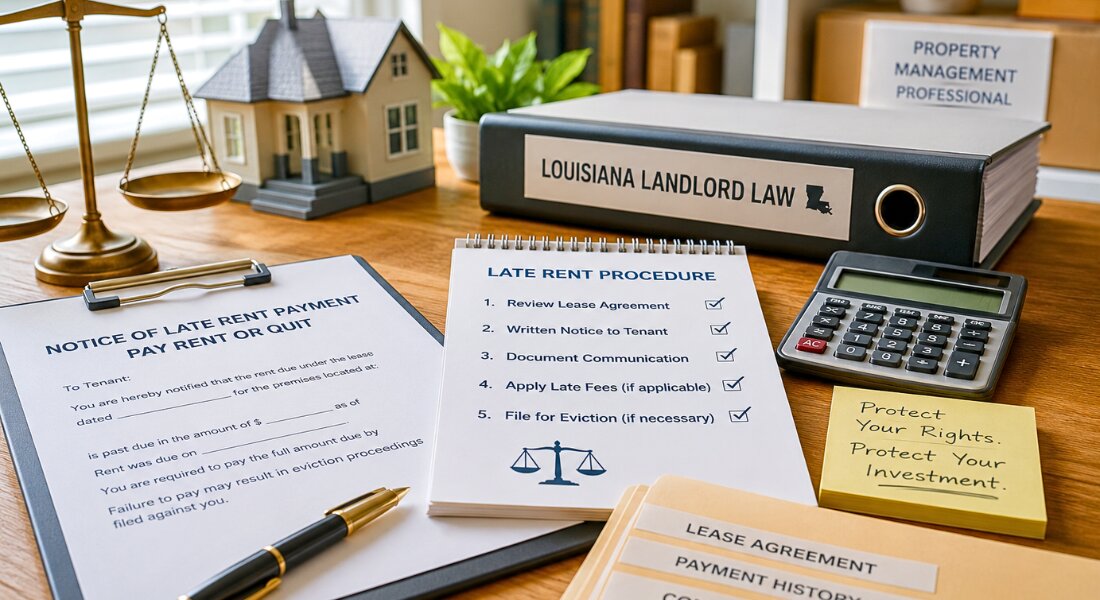
Late rent happens. A tenant loses a job, faces an emergency, or simply miscalculates their cash flow. As a landlord, your instinct might be to act fast, but moving without understanding your legal rights under Louisiana law can cost you money and create liability. Knowing exactly what you can and cannot do protects both your income stream and your legal standing. Whether you manage properties yourself or work with a professional property management company, understanding late rent procedures in Louisiana and the greater New Orleans area is essential.
Understand Your Lease and Grace Periods
Your lease agreement is your legal foundation. Louisiana law does not automatically grant tenants a grace period for rent payment, which means your lease terms control. If your lease states rent is due on the first of the month with no grace period, then technically rent is late on the second. However, many landlords build in a grace period, such as rent due by the fifth with a late fee kicking in on the sixth. Be clear and specific. Vague language creates confusion and weakens your position if you need to pursue eviction.
Check your lease for late fee amounts. Louisiana allows late fees as long as they are reasonable and not punitive. Courts have upheld late fees between 5 and 10 percent of monthly rent as reasonable, though some exceed this. Your lease should also specify how you will collect late fees, whether through rent reduction, a separate invoice, or another method.
About the Author: Billy Borrouso is a licensed real estate broker, Certified Residential Specialist (CRS), and licensed contractor with over 20 years of experience in the Greater New Orleans area. As the founder of Redfish Property Management, Billy brings a rare combination of real estate expertise and construction knowledge to landlords and tenants across Metairie, New Orleans, and the Northshore. He is a NOMAR Gold Award recipient and is committed to making property ownership stress-free for landlords while maintaining quality homes for tenants.
Document Everything and Communicate in Writing
The moment rent becomes late, start a written record. Save texts, emails, and notices. Do not rely on phone calls or verbal agreements. Louisiana courts require documented evidence if a dispute reaches the eviction stage. Send a written notice to your tenant as soon as rent is late. Keep it professional and factual. State the amount owed, the due date, and the deadline for payment before further action occurs.
Many landlords skip this step and regret it. A simple written notice often prompts payment within days because it signals you are serious. It also creates a paper trail that protects you. Use certified mail, email with read receipts, or hand delivery so you can prove the tenant received the notice. According to the City of New Orleans Housing Authority guidelines, documentation is critical in any tenant dispute.
Know When Eviction Is Your Only Option
If rent remains unpaid after a reasonable notice period, you may pursue eviction through the court system. In Louisiana, landlords file a Petition for Eviction in district court. The process requires formal legal documentation and typically takes several weeks. You cannot evict without a court order, and self-help measures such as changing locks or removing belongings are illegal.
Eviction is expensive and time-consuming, so use it as a last resort. Many landlords find that working with a leasing and management professional prevents late rent issues through rigorous tenant screening and clear communication from day one. Before filing for eviction, consider whether the tenant has shown willingness to pay or is simply unable to at that moment. If eviction becomes necessary, hire an attorney familiar with Louisiana landlord-tenant law to guide you through the process correctly.
Have questions about property management services across greater New Orleans, Louisiana? Reach out to us today and we’ll be happy to help you every step of the way.