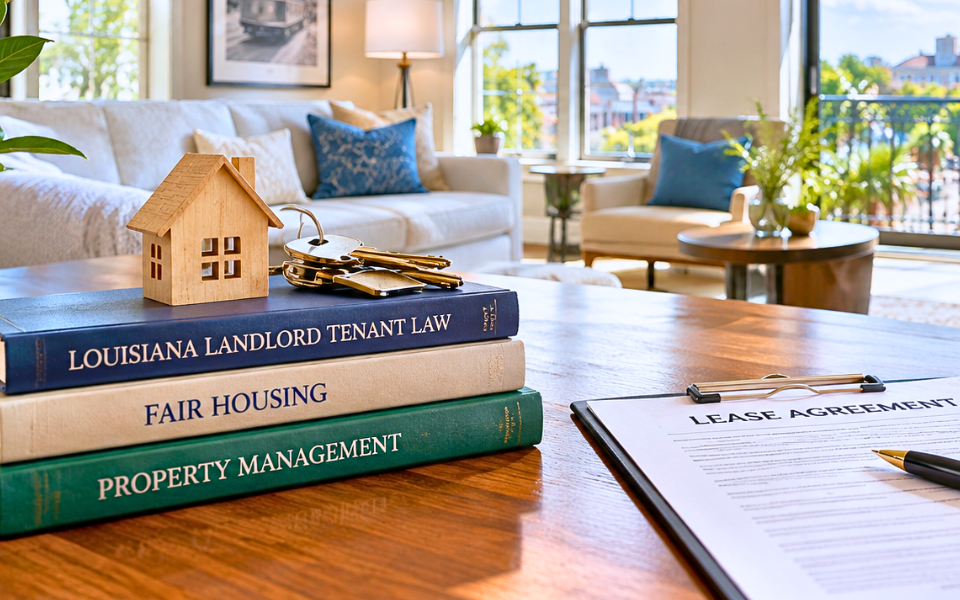


Empty units don’t generate income. They generate expense. Every day a rental property sits vacant, you lose rental revenue, continue paying property taxes and insurance, and risk further deterioration that drives maintenance costs higher. The math is simple: vacancy prevention is the fastest way to protect your bottom line. Smart landlords in the greater New Orleans area use professional property management combined with proven leasing strategies to keep units occupied and cash flowing consistently.
The True Cost of Vacancy
Most property owners calculate vacancy cost as simply lost rent for one month. The real number is much worse. While a unit sits empty, you’re still paying mortgage interest, property taxes, homeowners association fees, and insurance. Utilities may run to prevent damage. The property may need cleaning, minor repairs, or landscaping maintenance. If the unit stays vacant long enough, deferred maintenance compounds into expensive repairs that reduce the property’s value.
Consider a $1,500 monthly rental with a 10 percent annual vacancy rate. That’s 36 days of lost income per year, or $1,800. Add in mortgage interest, taxes, and insurance, and your actual cost could exceed $3,000 to $4,000 annually. Over five years, that’s $15,000 to $20,000 in lost or wasted money. A single vacancy prevented pays for professional property management many times over.
About the Author: Billy Borrouso is a licensed real estate broker, Certified Residential Specialist (CRS), and licensed contractor with over 20 years of experience in the Greater New Orleans area. As the founder of Redfish Property Management, Billy brings a rare combination of real estate expertise and construction knowledge to landlords and tenants across Metairie, New Orleans, and the Northshore. He is a NOMAR Gold Award recipient and is committed to making property ownership stress-free for landlords while maintaining quality homes for tenants.
Tenant Screening and Lease Renewal
Vacancy prevention starts before a tenant moves out. Strong tenant screening identifies reliable renters who stay longer and pay on time. When you select tenants carefully, lease renewals happen naturally. A good tenant wants to stay in a well-maintained home with a responsive landlord. A bad lease renewal decision forces a vacant unit and the entire leasing cycle to begin again.
The best retention tool is simple: respond to maintenance requests quickly and keep the property in good condition. Tenants who feel heard stay put. Those who feel neglected leave, taking the stable income stream with them. Professional management companies use strategic leasing practices to fill vacancies fast when they do occur, but the real win is preventing them in the first place through quality tenant relationships.
Strategic Timing and Market Knowledge
Local market knowledge matters more than most landlords realize. According to the National Association of Realtors, rental market conditions vary significantly by region and throughout the year. In the greater New Orleans area, demand patterns differ between neighborhoods. A property manager who understands Metairie rental trends versus New Orleans rental trends can time lease renewals and rent increases strategically.
Some landlords hold off rent increases out of fear tenants will leave. Others raise rent too aggressively and watch tenants walk. The middle path is knowing what the market will bear in your specific area and timing adjustments so renewals happen smoothly. This keeps tenants stable and rents competitive, reducing turnover and vacancy risk.
Have questions about property management services across greater New Orleans, Louisiana? Reach out to us today and we’ll be happy to help you every step of the way.