
Louisiana property owners know that storms bring real risks. When storms pass through the greater New Orleans area, damage to rental properties can range from minor roof leaks to catastrophic structural issues. If your property has sustained storm damage, acting quickly and strategically with your insurance company is essential. As a property management company serving New Orleans and Old Metairie, we’ve guided numerous landlords through the claims process. Here’s what you need to know about post-storm inspections and protecting your investment.
Conduct Your Inspection Safely and Document Everything
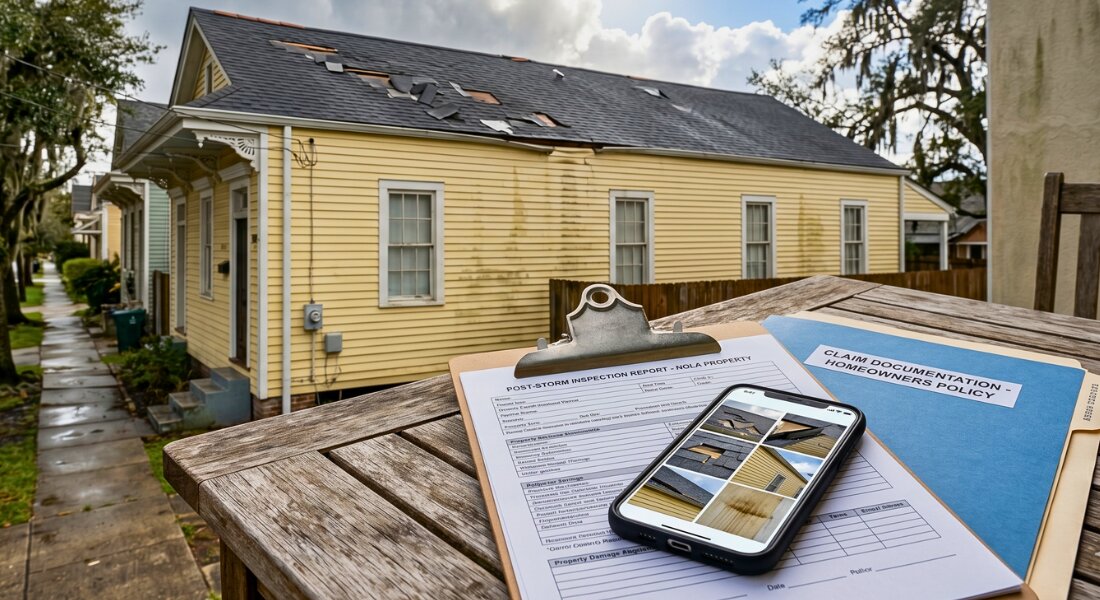
Before entering any damaged structure, ensure it’s safe. If you notice structural damage, downed power lines, or gas odors, call local authorities first. Once cleared, begin your inspection with a camera or smartphone. Photograph every area of damage, including wide shots of the overall affected space and close-ups of specific damage points. Capture water stains, broken windows, roof damage, and any contents that were harmed. Save all photos and videos with timestamps enabled. This visual evidence becomes crucial when filing your claim and dealing with adjusters.
Walk through systematically, room by room, and note the date and time of your inspection. If you use a property management service, notify them immediately so they can coordinate the inspection process and maintain detailed records for your file.
File Your Claim Promptly and Review Your Policy
Contact your insurance company as soon as possible, even if you’re still assessing the full scope of damage. Most policies have specific timeframes for filing claims, and delays could jeopardize your coverage. Provide your adjuster with your documented photos and a detailed written account of the damage. Be factual and specific about when you discovered the damage and what you observed.
Before the adjuster arrives, review your policy to understand your coverage limits, deductibles, and any exclusions. Many standard policies exclude flood damage, which is a common issue in Louisiana. If water damage resulted from flooding rather than wind or rain intrusion, your flood insurance (if you have it) would apply instead. According to the Federal Emergency Management Agency (FEMA), more than 90 percent of disaster-related damage comes from flooding, so reviewing this coverage is critical.
Work With Your Adjuster and Consider Professional Assessment
When the insurance adjuster inspects your property, be present if possible. Point out all damage you’ve documented, ask questions about coverage decisions, and request an itemized estimate. Don’t agree to a settlement immediately if you believe the assessment is incomplete. You have the right to hire an independent adjuster or contractor to provide a second opinion, and your insurance company must consider that assessment.
For rental properties, understanding the difference between actual cash value (ACV) and replacement cost coverage matters significantly. Replacement cost typically reimburses you for what it actually costs to repair or replace damaged items, while ACV accounts for depreciation. Ensure your claim reflects the correct coverage type.
Keep all receipts, estimates, and correspondence with your insurance company. If you need guidance navigating claims or coordinating repairs, reaching out to an experienced property management team can streamline the process and protect your interests. Our team understands Louisiana’s unique weather challenges and knows how to work effectively with insurers.
Storm damage claims can be complex, but you don’t have to handle them alone. Whether you’re managing the property yourself or working with us, staying organized and proactive gives you the best chance of a fair settlement. For personalized advice on protecting your New Orleans rental property, contact our team today.
Have questions about property management services across greater New Orleans, Louisiana? Reach out to us today and we’ll be happy to help you every step of the way.